Product Description
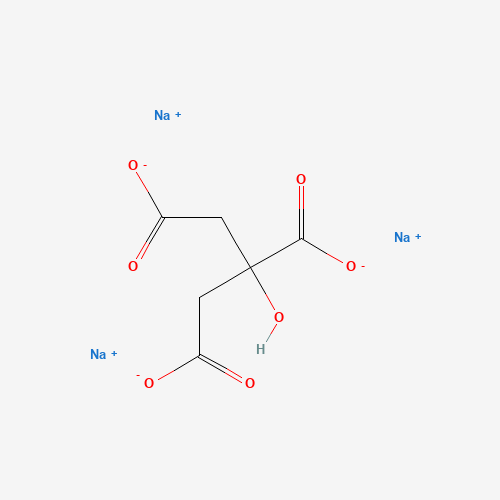
- Molecular Formula: Na3C6H5O7
- Appearance: White, crystalline powder or white, granular crystals
- Taste: Sour, like citric acid
- Solubility: Freely soluble in water, practically insoluble in alcohol
Sodium Citrate presents as a white, free-flowing crystalline powder with no odor and a faint saline taste. It is recognized for its purity (99%), a high melting point (over 300C with decomposition), and is non-poisonous. The substance is stable under normal temperature and pressure, making storage straightforward: keep it in a tightly closed container in a dry and ventilated setting. Its molecular weight is 258.07 g/mol, with a pH of 7.5-9.0 (5% solution).
Industrial and Food ApplicationsThis compound serves multiple industries, acting as a preservative, acidity regulator, flavoring agent, and anticoagulant in food technology. It's also vital in laboratory and pharmaceutical settings as a pH buffer and emulsifier. Thanks to its high solubility in water and non-caking characteristic, it mixes easily into solutions, supporting a wide range of formulations with consistent results.
Quality Assurance and Safety StandardsQuality is crucial for Sodium Citrate: it contains minimal heavy metals (10 ppm) and lead (2 ppm), ensuring safety, particularly for food and pharmaceutical use. The product is classified as non-hazardous and non-poisonous, making handling and storage safe under normal guidelines. Its packaging in 25 kg HDPE bags with inner liners further protects its quality throughout distribution.
FAQ's of Sodium Citrate:
Q: How should Sodium Citrate be stored to maintain its stability and shelf life?
A: Sodium Citrate should be kept in a tightly closed container, stored in a dry and well-ventilated place. This helps preserve its stability and ensures the product maintains its two-year shelf life without caking or loss of quality.
Q: What are the main benefits of using Sodium Citrate in food and pharmaceutical applications?
A: Sodium Citrate acts as a preservative, acidity regulator, and flavoring agent in food, extending shelf life and enhancing taste. In pharmaceuticals, it serves as a buffer and anticoagulant, ensuring consistency and safety in various preparations.
Q: When is Sodium Citrate commonly used in laboratory procedures?
A: Sodium Citrate is frequently employed as a buffering agent and an anticoagulant during blood sample collection and analysis, helping maintain the desired pH and preventing blood clotting during processing.
Q: Where does Sodium Citrate find its primary industrial use?
A: Its primary industrial uses are in the food industry as a stabilizer and flavor enhancer, and in pharmaceuticals for laboratory and clinical preparations, given its purity and chemical stability.
Q: What is the process for dissolving Sodium Citrate in water, and what are its solubility characteristics?
A: Sodium Citrate dissolves easily in water due to its high solubility. To prepare a solution, simply add the required amount to water and stir until fully dissolved. It is only sparingly soluble in alcohol, so water is the preferred solvent for most applications.
Q: Is Sodium Citrate hazardous or poisonous to handle?
A: No, Sodium Citrate is classified as non-hazardous and non-poisonous under normal conditions. It should, however, be handled following standard safety protocols, avoiding contact with strong acids or oxidizing agents.
Q: How does the pH level of Sodium Citrate solutions benefit various applications?
A: The pH of a 5% Sodium Citrate solution typically ranges from 7.5 to 9.0, providing a near-neutral to slightly alkaline environment. This property is especially valuable as a buffer in both food and pharmaceutical processes, where precise pH control is essential.






 Send Inquiry